Tuesday, April 21, 2015

Time Well Spent

Perseverance is the hard work you do after you get tired of doing the hard work you already did. ~Newt Gingrich

This is it!  My final blog post!  I am at the end of my master's program and will soon have that hard earned diploma in my hand.  As I turn the page on this chapter, I want to say a thank you to all my colleagues who shared this journey with me.  Congratulations to all of you who set out to accomplish your goals.  You did it!  And thank you to my instructor, Johnna Darragh.  I really appreciated your encouraging words and support throughout the classes I had with you.  

Going through this program was difficult.  I sacrificed time with my family, stayed up late and worried a lot.  Now that it is over, I am not sure what to do with myself.  All I know is that I had three really important reasons that started me on this journey and stuck with me through it all.  And here are two of them:


 I learned so much during this program, it is hard to narrow it down to only two or three things.  I see the impact this course has had on my professional knowledge every day at work.  I feel it in the confidence I have when I talk about the field.  I know the knowledge I gained has made me a stronger leader and a turned me into a real teacher.  As I move on to more challenging positions in my career, I can feel confident that I have the skills to be successful and be able to build on them as I work toward the next step in my career progression.

I want to leave you with one more quote:

"The road to success is dotted with many tempting parking places."~Author Unknown  

We got to this place because we did not give up, we kept on going, always looking toward that dim light at the end of the tunnel.  Week after week, course after course that light got a little brighter.  And now here we are outside of that tunnel and into the light of new opportunities!  Congratulations, everyone!  Job well done, time well spent!

~BethAnn
bethannk3@msn.com

Wednesday, April 8, 2015

International jobs and roles in the ECE community

This week I will be discussing jobs and roles in the international ECE community.  There were several organizations that caught my eye when I was looking for some to share with you.

The first one is The World Association of Early Childhood Educators (2012).  Their core mission is to advocate for the development of every child, to educate their members in the latest research and information in early childhood education, help educators to network, and bring to light the importance of the early years. The first thing I noticed on their site was "Hot Topics" and the first one was "How brains are built: The core story of brain development".  I thought this was great because the challenge I chose for this course was nurturing brain development in young children.  I didn't see any links to career opportunities, but there is the option of becoming a member of the group and networking with other ECE professionals.

The second organization I found was the Association for Childhood Education International (2011).  Their mission is to promote and support the optimal education, development, and well-being  of children worldwide. They advocate for children, but also train and educate teachers and care providers.  They have many ways to help members further their education, including CDA programs, grants, scholarships and awards.  The work with many partners around the world and within the United Nations, as well.  Opportunities to get involved with the organizations seem to start with memberships or internships.  

The third organization I want to share is UNESCO, the United Nations Educational, Scientific and Cultural Organization.  This organization is dedicated to building peace, eradicating poverty and building international dialogue, mainly through focus on education throughout the world.  This organization actually listed job opportunities and they seem to range from highly skilled positions to office and administrative support.  One thing that caught my eye about this organization is their campaign to create equality in education for girls and women around the world.   


References:
Association for Childhood Education International. (2011).  Retrieved from http://www.acei.org

The World Association of Early Childhood Educators. (2012).  Retrieved from http://www.waece.org/

UNESCO. (2015). Education for the 21st century.  Retrieved from http://en.unesco.org/themes/education-21st-century

Wednesday, March 25, 2015

Jobs and Roles In the ECE Community: National and Federal Level

There are many national organizations for early childhood education.  One of the most well known is the National Association for the Education of Young Children (2015).  I would love to work for this organization some day.  I am not sure what jobs are available with them right now as that function of their website is down, but I am certain that a Master's Degree in early childhood studies would be able to get me an entry level position somewhere in the organization.

Another national organization that looks promising is the NAECTE, the National Association of Early Childhood Teacher Educators (2015).  As an organization, this is more of a Community of Practice as their purpose is to promote growth and advocate for their members, create a forum for discussions of issues in the ECE field.

A third national/international organization I find intriguing is the HighScope Educational Research Foundation (2015).  They are an independent organization based on the landmark research study in the Perry Preschool Program, which tracked 123 children born in poverty through the HighScope Preschool Curriculum in the 1960s until their 40's.  The study showed the effectiveness of early childhood education. They have several job opportunities such as vice president, training and curriculum specialists, and various teachers and administrators at several different programs.  I feel that with enough experience I could qualify for one of these positions.  It would be awesome to work for such an organization!

In the federal arena, there are several agencies that perform work in the ECE field.  Obviously, each military branch has their child and youth programs with plentiful opportunities to work in centers or administration.  But within the Department of Health and Human Services there is an office within the Administration for Children and Families dedicated specifically to early childhood development.  Their job is to "promote a joint approach at the federal level to improving the availability of high quality early learning and development programs" (Early Childhood Development, 2015). I am not sure I would want to work for the federal government any more than I do.  Eventually I would like to work outside of the military in one of the organizations I mentioned above.


References:
Early Childhood Development. (2015). About. Retrieved from http://www.acf.hhs.gov/programs/ecd/about

HighScope Educational Research Foundation. (2015). About us.  Retrieved from http://www.highscope.org/Content.asp?ContentId=761

The National Association of Early Childhood Teacher Educators. (2015). Home. Retrieved from http://www.naecte.org

The National Association for the Education of Young Children. (2015). Home. Retrieved from http://www.naeyc.org


Thursday, March 12, 2015

Start of EDUC 6990. Exploring Roles in the ECE Community: Local and State Levels

In thinking about communities of practice this week, my mind jumps to communities within the early childhood field.  I am a member of the National Association for the Education of Young Children (2014).  This is a great organization, and if you don't already know about it click here.  This is definitely an organization I would like to work for someday if the opportunity ever presented itself.

In Hawaii, we have an affiliate organization of NAEYC, the Hawaii Education for Association of Young Children (2014), or HAEYC.  I was privileged to attend an HAEYC conference back in October and it was really nice such a large gathering of early childhood professionals.  I have not yet become a member, but I am considering it.  I would also consider working for this organization.

In my search for local organizations, I came across the Hawaii Early Childhood Action Strategy.  The Hawaii Early Childhood Action Strategy is a research based strategic plan, informed from the fields of neurobiology, developmental psychology, and human capital economics in early childhood systems development (Hawaii Early Childhood Action Strategy, 2014).  It is definitely something I want to learn more about.

References:
Hawaii Action Strategy. (2014). Home. Retrieved from http://hawaiiactionstrategy.org

Hawaii Association for the Education of Young Children. (2015). Home.  Retrieved from http://www.hawaiikeiki.org

National Association for the Education of Young Children. (2014). Home.  Retrieved from http://www.naeyc.org.

Tuesday, August 19, 2014

Goodbye-End of EDUC 6165

As this course comes to an end, it marks a new chapter in our studies.  We will all be moving on to our specialization courses for the remainder of our programs.  I will be focusing on Administration, Management and Leadership.  For those of you in this specialization, I look forward to seeing you there and continuing our collaboration.  For those of you going in another direction, I wish you the best of luck in your program and future goals.  Thank you all so much for every contribution, discussion and word of encouragement.  It was a pleasure working with you and learning from you.  See you at the finish line!

...for hanging out with me!


Friday, August 8, 2014

The 5 Stages of Team Development

This week we are learning about team development.  There are five specific stages in group development:  forming, storming, norming, performing, and adjourning (O'Hair & Weimann, 2012).
For this week's blog I am going to focus on Adjourning, the final phase of group development that occurs after the project, goal or task has been accomplished.  In my experience with Adjourning, i have been very happy to get away from my group or very sad to leave my group.  When I left my job in Japan, I was not sad to go.  Everyone I had built relationships and trust with had gone and the new team leader did not develop the team effectively at all.  When I left my job in Maryland, I was very sad.  I had made great friends, learned so much and knew I would miss my work there. I still keep in touch with my coworkers there. When I have to leave my job here in Hawaii, I will again be very sad as everyone here is so nice and there is a real sense of camaraderie and team work.  I am sure I will have made friends and colleagues that I will keep in touch with after I leave.  Unfortunately, being a military spouse means I have to leave my job every 3-4 years, so I have a lot of experience with adjourning.
Whenever one of my courses in this program ends, I always feel a little anxious, because I have got to know some of my colleagues pretty well and do not want to have to deal with the process of learning new people (even though it always turns out great).  there are a few people who have been with me since the beginning and I always hope that they are still in my group because they are so much fun to discuss with and always have good things to impart.

Tuckman's 5 Stages of Group Development

Saturday, August 2, 2014

Using Conflict Resolution With Children

This week we are learning about conflict management and resolution.  While I am not directly experiencing conflict right now, the fact that I work with children and have two of my own means that I am constantly managing conflict.  One of the things that I have learned about managing conflict with children (and adults) is that you need let the children know you hear what they are saying.  More than anything, they want to tell their side of the story.  But to speak, the other has to let them.  So it is also important to make sure the other child gives that respect and is also able to respond.  Modeling calmness and respect is very important in these moments.  The other thing that I have found to be important is to let the children find a solution to the problem.  Helping them to figure out a compromise or find an alternative works much better when they feel they have come up the ideas themselves.

I think the best thing to do is to teach children how to communicate without conflict when ever possible.  Marshall Rosenberg, the founder of The Center for Nonviolent Communication has said: "When our communication supports compassionate giving and receiving, happiness replaces violence and grieving!"  We should keep this in mind when teaching children positive communication skills.

A very simple form of conflict resolution for children


Look familiar?


How about this?  Praising children for positive behaviors helps to teach and reinforce those behaviors.  


Saturday, July 26, 2014

Myself as a communicator

This week I took three quizzes that determined my communication styles in verbal aggressiveness, listening styles and communication anxiety.  I know that I have some anxiety about speaking in front of people, so when I scored moderate or "situational" on this quiz, I wasn't surprised.  Since working with children and families, I have had to push past my feelings of comfort in speaking with and in front of others and have success with my anxiety levels.  I can now do things that would have terrified me years ago.

My verbal aggression score was moderate, which I believe is accurate, because I am not one to pick fights or try to make others feel bad about themselves.  It takes a lot to make me push back and be "mean" when others are being verbally aggressive towards me.

The last quiz was Listening Styles.  My score showed my that I was people oriented in my listening style, that I am empathetic and concerned about people's emotions, which I believe to be true.  It also says that it can interfere with proper judgment because I tend to be very trusting of others.  This was a bit eye opening.  I am actually not that trusting of people's motives, but will tend to take them at their word, sometimes against my better judgement.  In the future I will keep this in mind.

Had to add a little of The Far Side. These cartoons were great commentary on how we communicate.  

Friday, July 18, 2014

Cultural diversity and communication in my life

When I think about my workplace, there is a lot of diversity.  I have staff members from the Philippines, Vietnam, Africa, Thailand, Hawaii, and the U.S. Mainland.  We all have different life experiences, world views, and cultures.  Getting to know my staff, I have found that I have to be cognizant of the cultural background of the person I am talking to.  For example, my African staff member sometimes need further explanation for things and, although her English is good, I try to use simpler language with her in order to facilitate clearer communication.  I think that with her it will be good to be patient and get to know her I know that my Thai staff member has a different communication style and it often rubs her colleagues the wrong way.  One way that I can use what I have been learning this week is try to coach her in her communication style while reminding staff members to be understanding and patient with her.  While I don't understand all the nuances of the communication styles of my various staff members, I can always be open and honest and let them know that they can feel free to speak freely, and let me know if they don't understand me or what I am trying to communicate.


Saturday, July 12, 2014

Communication Assumptions

For this week's assignment we are to watch a show we haven't seen before and see what we can assume from watching with no sound.  The show I chose was 30 Rock starring Tina Fey.

From this episode I assumed that the show was based in a television studio.  Without sound I assumed that Tina Fey (Liz) seemed to be in charge of some people and subordinate to others.  I could tell from the way she communicated to certain people that they were subordinates.  There was a young woman in the studio who she seemed to be a mentor and mother figure to.  She had several heart to heart talks with her.  There was a also a woman her age, who seemed to be the star of the show Liz works on, who appears to be her friend.  Her boss seemed to be an intimidating figure to most of the staff.  Her boss's assistant seemed to be at the whim of the boss and frightened of him.  Liz often seemed frustrated and annoyed by her subordinates but attempted to appease her boss and Tracy Morgan's character.  I enjoyed this show.  It was really funny :D

After watching with the sound on, I found that many of my assumptions were right, but some where not.  I assumed that some characters were friends, but that was because one character (Tracy) was pretending to like the other one.  He was not Liz's boss, but she was in charge of his happiness.  I assumed that the Boss's assistant was just frightened of his boss but he really was protective of him; at the same time, he blamed Liz for things that went wrong in order to keep any heat off of himself; his dislike of Liz was more obvious in his words.

If I was familiar with this show or had watched it several times, I probably could have made better assumptions in regards to the plot and relationships.  Also, I was unclear about some of the relationships and one episode did not get me to understand all the connections simply by watching interactions.  It was interesting watching without sound because I was actually able to glean a lot more than I thought and definitely more that I could have if I had only been listening to it and had nothing visual to go on.  This tells me that body language and non-verbal cues are very important in communication and in being able to understand a situation.

Friday, July 4, 2014

Beginning of EDUC 6165 Communication and Collaboration in the ECE Field

Effective communication model in my own life

It is the beginning of a new course.  For this week's assignment I am to describe a person that I know that I believe has very effective communication skills (or not).  For me this is my 2nd level supervisor at work.  I really admire her communication skills.  When speaking to individuals, this person is very responsive.  She gives you her full attention and responds with words like "absolutely" and validates what you are saying to her when she concurs.  When she doesn't agree, she tells you that she doesn't and gives her reasons why without making you feel stupid or wrong.  She will then ask if you agree or understand.  Another thing that she does is that she is very open to feedback when talking to a group.  She gives people room to talk if they have questions or concerns, but at the same time she is able to take control of the situation and get the attention of the group.  Her tone is authoritative, but respectful.  Another thing that I think she does well in terms of communication is that she admits her mistakes.  She acknowledges that she is not perfect and makes mistakes, and will say that she has to find out if she does not know an answer to a question.

These are skills that I try to emulate, especially the tone and manner in which I communicate.  I think that I could use work in the area of my professional tone and I use her as an example when speaking to subordinates.

Monday, June 23, 2014

Professional Hopes and Goals-End of EDUC 6164

As I end this course, my hope is that I have learned the things I need to know in order to go forward and serve the families and staff I work with with fairness, equity and honesty.  I feel like my perspective on diversity and equity has been expanded and broadened in that I have a clearer picture of how people can feel marginalized and how bias and prejudice can lead to injustice.  I have been given some tools to help me navigate these waters and I feel like I have some more tools in my toolbox now. :)

One goal that I would like to set for the early childhood field in regard to diversity, equity and social justice is to see more senior citizens in the early childhood.  I really believe that seniors can bring a great deal to the field and I will try to make opportunities for this to happen in my own environment.

In closing, I want to thank all of my colleagues for their not only their great support during this course, but for the personal information that they shared and for the respect they showed me when I shared my personal stories.  It was not an easy course but the interactions with my colleagues made it easier.

Good luck in the next course everyone!  Hope to see you there!

BethAnn

Friday, June 20, 2014

Welcoming Families From Around the World

This week, I am to imagine a scenario in which I will be receiving a child into my program whose family has recently immigrated to the U.S. from a country I know nothing about and how we will prepare for this. (In this scenario, I can choose the country).  I chose for my immigrant's family Sudan.  I chose Sudan because I know nothing about it except that it is in Northern Africa and is a war torn and extremely impoverished country.  As I read about Sudan, I learned that its people have been experiencing wars, unimaginable poverty and oppression, and countless other human rights violations.  Anyone that is lucky enough to be able to get out of there would probably have a lot of physical, emotional or psychological issues.

To prepare for this family, I would first make sure I understood the region they were coming from and what was happening there.  I would then consult a developmental psychologist for advise on children that come from war torn environments.  I would not assume they are Muslim, because the persecution of Christians there would lead me to wonder if they were religious refugees.  Once I knew for sure their religion, I would make whatever accommodations I could for them if necessary.  Another thing I could do is learn a little of their language and about their surface culture so I could teach the children in the program some things about Sudan which would help to ease the transition for the child a little bit.  If possible, I would try to locate other Sudanese in the area to help bridge the communication gap, as well as create a more familiar atmosphere for the child and family.

I would hope that all of these preparations would benefit the family and child by giving a sense of welcoming, caring and friendship to the new immigrants.  It will also educate the staff by teaching them about a region of the world that they probably never thought about before and that is completely different from the comfortable life they have here in the U.S.

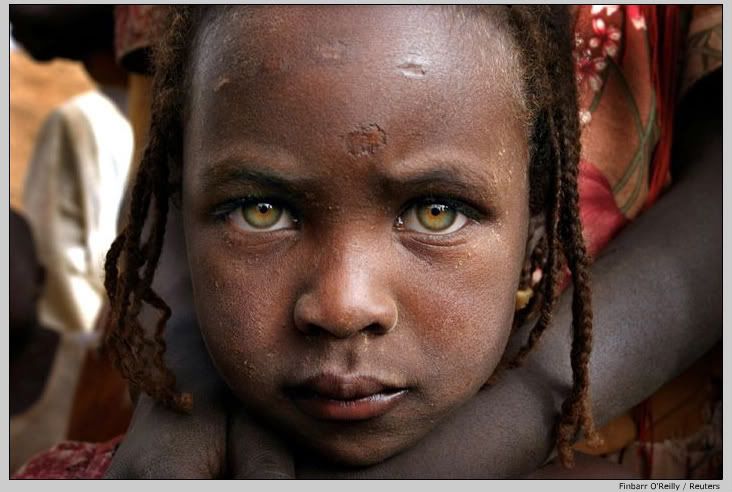
Images of Sudanese Children


Saturday, June 14, 2014

The Personal Side of Bias, Prejudice and Oppression

I have been trying to think of a specific time when I have faced bias, prejudice and oppression.  I can't think one specific instance, but I know that as a young woman I experienced harrasment by boys; as a Mormon I have dealt with people who are completely biased against the LDS church and have crazy, ignorant ideas about my faith; I have had to deal with negative comments about white people, conservatives, adoption, the military, Americans, women (working mothers, stay at home mothers).  The list goes on.  Everything that I am, and everything that I identify as, has at some point been the target of bias and prejudice, no matter how slight.   I carry with me the frustration of not being able to enlighten people of the reality of the facts, but I do not carry with me pain or anger toward those people.  It seems futile to do so.


I have often felt this way from the men I work with.  


As I read the blogs of all my colleagues, I read many different accounts of bias and prejudice, from breastfeeding to overt racism.  I think that as early childhood professionals it behooves us to be aware that no matter what, biases and prejudice will always exist.  We must find a way to deal with it appropriately when we face it, and not dwell on it when it is not present.  We need to teach tolerance and appreciation for others to our children more than anything.


Friday, May 30, 2014

Practicing Awareness of Micro Agressions

According to our video presentation this week micro-agressions are "brief, everyday indignities that may be verbal, behavioral or environmental, are communicated intentionally or unintentionally and contain an insulting message toward any marginalized group" (Laureate Education, Inc., 2011).   When I think about myself as the target of micro-agressions, I have a hard time coming up with them, because I don't really put too much weight in what people say, and I usually forget about it.  
The only time I really worry about it is when it involves my children.  

My family is a multi racial family.  


In the United States today, it is a fairly common thing to see, whether it is children of mixed race parentage living with their biological parent(s) or adopted/foster children living with parents of a different race. Seeing these types of families should not really be that shocking.  But unbelievably, we do get comments from time to time.  Most are positive, but some not so much.  

Some of the more negative/micro-aggressive comments (and their hidden meanings) we have gotten are as follows:
"Do they speak Chinese?" (They are Taiwanese, so they must speak Chinese and not the perfect English of their American culture)
"Where are they from?" (They are Asian, so they aren't really Americans)
"Are they related?" (Adoption does not create "real" relationships)
"They are so lucky!" (They were rescued from a dire situation by rich, white westerners)
"How much did they cost?" (They were bought and paid for like goods).
Probably the worst: "Are you going to have kids of your own?"  (These are not your real children).  

I think that the many of these comments speak to the ignorance people still have when it comes to not only Asians immigrants, but adoption and what makes a family.  I think the worst thing about these comments is that as my children grow up, they will begin to understand their hidden meanings, where as before I could shelter them from it.  I do not yet know how they will take these comments, but I am trying to impart to them that people do and say things sometimes that are not OK, but we don't let it bother us and we should try to move on.  I do not want them to ever question the love their family, both adopted and biological, have for them, who they are, or that they were and are wanted, and most of all, that their mom and dad are really the lucky ones.  

References:
Laureate Education (Producer). (2011). Microaggressions in everyday life [Video file]. Retrieved from https://class.waldenu.edu/webapps/portal/frameset.jsp?tab_tab_group_id=_2_1&url=%2Fwebapps%2Fblackboard%2Fexecute%2Flauncher%3Ftype%3DCourse%26id%3D_4855814_1%26url%3D

Saturday, May 24, 2014

Perspectives on diversity and culture...A survey

This week, our assignment was to ask 3 people to define what they thought culture and diversity are.

"What is culture?"
My husband: The traditions, customs that are passed down over time that define a group of people.
My sister:  A group of people who are, because of geography or religion, similar in belief and social understanding.
My daughter (5.5 years old): It means you speak a language, like Chinese, and have special clothes and traditions, like Chinese New Year.

"What is diversity?"
My husband: Something that is not homogenous.
My sister: A group of items or people that are different.
My daughter: It's like Helen Keller.  She was blind and deaf and she learned sign language. People are different and special.  

It is always interesting when you ask people what culture is, and what diversity is.  Often they have stop and think about it, and they may not even think they know the answer.  I chose these three people because they represent interesting differences.  My husband, is also American, but grew up in a very different family culture than mine.  My sister grew up with me, but I was curious what she would say, because her life experience has not been mine.  My daughter has been learning about culture and diversity at school, so I thought her answer would be interesting.

I think that I got some relevant, accurate descriptions of culture, although diversity was a bit harder for them to define in detail.  What I learned from the answers I received is that even though we do not think about it, culture and diversity are concepts that we clearly understand, even from a young age.

My daughter Sydney at a Hula performance

Thursday, May 15, 2014

Beginning of EDUC 6164: Perspectives on Equity and Diversity

My Family Culture

This week we were given a scenario to answer:  A major catastrophe has struck our country and the emergency government has decided to evacuate us to other countries willing to take refugees, but we have no choice in where we will go.  The culture will be completely different from ours and we may have to stay permanently.  Evacuees may take one change of clothes and 3 small items.  The items I take are those that I hold dear and represent my family culture.

The three items I would take are my iPad, my favorite book and a piece of jewelry from my mother.
I would take my iPad (assuming it was useable) in order to have my family pictures, access to my genealogy and family tree, as well as access to information about  the culture and country I am going to.  I would take my favorite book as a link to my culture and to have entertainment I am familiar with.  I would take a piece of jewelry from my mother in order to have something to pass on to my children and give them a connection to their family and culture.  If I had to give up all but one item, I would keep the jewelry.  I honestly could live without any of these things, but the jewelry holds the most sentimental value to me.

As I was thinking about this scenario, I thought of my relatives who left their home cultures and families to move to this country, leaving everything they knew behind.  They had to learn a new language and assimilate to a new culture, but they also carried with them the knowledge and customs of their home countries and passed it down to their children.  I would hope that I could do this if I had to face the same situation.


Sunday, April 20, 2014

When I think of research... (End of course reflection)

I used to think that research meant long hours in the library pouring over books and articles to find the information I needed to write a paper.  After taking this course, I now know that research has many different meanings and contexts.  I have also learned that there are many ways to do research and specific methods to utilize.  Conducting research in the early childhood field is not something that I had ever considered to be relevant to my work, but I can see that it can be very relevant.  If there is ever an issue I need to clarify or look into, knowing how to conduct research on it will be a huge help in getting the right information.

The challenges I found in this course were learning all the new terms for the different research methods and keeping them straight.  The only way I learned them was by reading and re-reading until I had them right :)

As an early childhood professional, this course has helped me by teaching me how to read research without spending hours and how to conduct research in a way that is valid, feasible and ethical.  Both of these skills will benefit me professionally by allowing me to read research in the field and understand how it was done.

Overall, this course would not have been one that I would have chosen to take, but like all the previous courses in this program had much to teach me.  I am glad I got to take it.

Thank you to all my colleagues in this course.  Your professionalism, skill and support have been invaluable to me.

Wednesday, April 2, 2014

Research Around The World

For this week's blog assignment we have the option of exploring three different early childhood websites.   The choices were:
http://www.ecdvu.org/ssa/index.php - Early Childhood Development Virtual University-Sub Saharan Africa

http://www.earlychildhoodaustralia.org.au - Early Childhood Australia

http://www.eecera.org European Early Childhood Research Association

I chose Early Childhood Australia because I already have some experience with this organization.  This organization was one of two out of six early childhood organizations that I contact and that responded to my request for a contact, an assignment we had in our last course.  The person who ended up being my contact from Early Childhood Australia was very informative and so happy to collaborate with me.  

On the site there is a link to Research in Practice Series (RIPS).  These are publications that "provide practical, easy-to-read resources for those involved in the early childhood field".  I perused the list and they topic cover professional development, challenging behavior, play, transitions, diversity, and so many others.  ECA Webwatch is a free newsletter that you can subscribe to.  This e-newsletter offers an eclectic mix of information on early childhood development, growth and learning, early childhood practice, programs and policy, emerging issues and research.

Friday, March 21, 2014

My Ultimate Research Dream

If I could conduct research on any topic in child development that would have long lasting benefits to society, I would conduct research on common core standards and its effect on the early childhood field.  I personally have concerns regarding common core and its top down approach to education.   The fact that it was produced by the National Governor's Association does little for me in the way of convincing me of the educational value of the standards.  According to the National Association for the Education of Young Children (2012), the focus on only two standards, and the absence of social-emotional development and approaches to learning is of great concern.  I would like to research how this is going to affect children's outcomes and if it is actually going to be beneficial.

References:
National Association for the Education of Young Children. (2012).  The common core standards: Caution and opportunity for early childhood education.  Retrieved from http://www.naeyc.org/files/naeyc/11_CommonCore1_2A_rv2.pdf