Saturday, February 8, 2014

Inequity in early childhood education in Australia

My contact in Australia focuses most of his work with Aboriginal and Torres Strait Islander communities as well as children with disabilities.  In areas of equity they have focused on improving access to early childhood education and 'Closing the Gap' in disadvantage between Aboriginal and Torres Strait Islander children and other Australian children; and the 'cultural competency' of Early Childhood Services.  Here is a link to a paper written by the Secretariat of Aboriginal and Islander Child Care which explores the cultural competence of the Australian early childhood care and education system, and in particular their National Quality Standard, with regards to its inclusion of Australia's native populations in their framework and ensuring their cultures are valued.  http://www.snaicc.org.au/_uploads/rsfil/03265.pdf

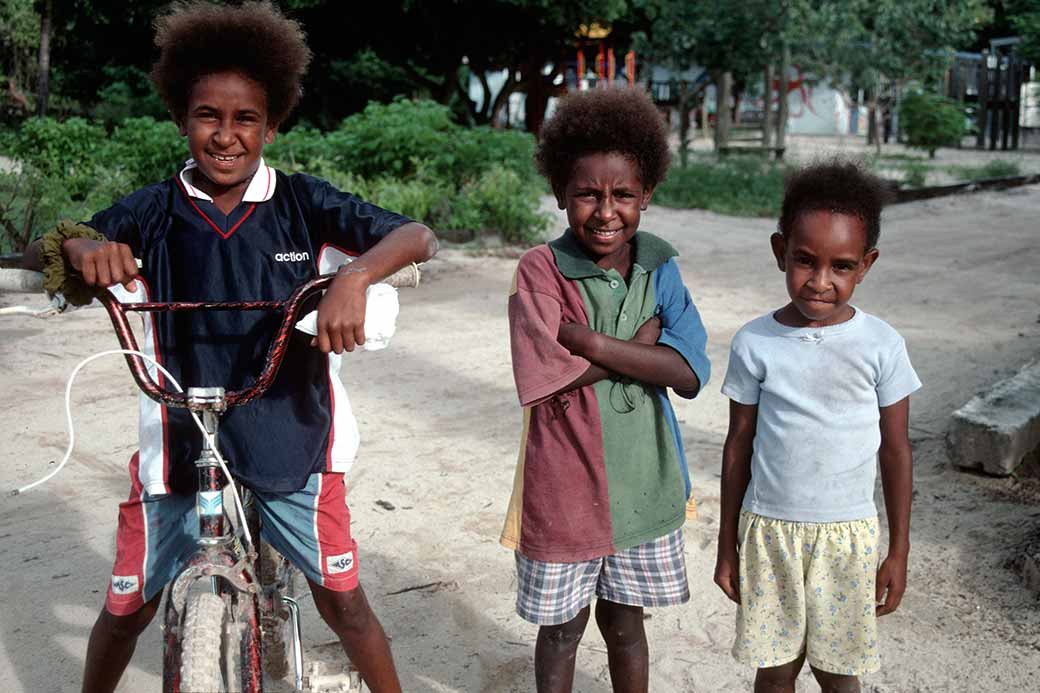
Australian Aboriginal children

Torres Strait Islander children


Children with disabilities have a lower participation rate in Australian early childhood education than their counterparts.  This is most likely due to lack of resources, such as specialized equipment, additional staff members, or the need for environmental/activity modifications.  Another factor could be lack of trained staff, therapists, or lack of bicultural staff to address to particular needs of the child.

Child at the Australia Royal Children's Hospital

Saturday, February 1, 2014

Sharing Web Resources-National Black Child Development Institute: Being Black Is Not A Risk Factor

WHAT SHALL I TELL MY CHILDREN WHO ARE BLACK?
…What can I do to give him strength
That he may come through life’s adversities
As a whole human being unwarped and human in a world
Of biased laws and inhuman practices, that he might
Survive. And survive he must! For who knows?
Perhaps this black child here bears the genius
To discover the cure for... cancer
Or to chart the course for exploration of the universe.
So, he must survive for the good of all humanity.
— Margaret Burroughs
Educator, artist, poet and founder of
the DuSable Museum of African American
History in Chicago


This week I am to relay something from my chosen website that has been of specific interest to me as an early childhood professional.  This is a good website for general information, but there is not a lot of specifics in regards to information regarding early childhood education, and I have not received the newsletter yet.  The site does have some resources available under their resource tab.  One that was of particular interest to me was a publication that is available for download: "Being Black Is Not A Risk Factor".  This paper is of particular interest to me because I feel that working with black children, I need to understand the challenges that black children face, especial those that I have not experienced being white.  It is "designed to challenge the prevailing discourse about Black children–one which overemphasizes limitations and deficits and does not draw upon the considerable strengths, assets and resilience demonstrated by our children, families and communities."  I have not read all of it as it is 68 pages long, but so far it is very informative and interesting.  It is giving me a perspective that I had not had before.  I highly recommend this publication.

Friday, January 24, 2014

Getting To Know My International Contacts (Part 1)

I was finally able to make contact with two international colleagues.  I made contact by going through  the websites of organizations I found in a web search.  The first organization I contacted was Early Childhood Australia and was put in touch with Chris Steele, a policy and project manager, who has been very accommodating and informative.  Their website is www.earlychildhoodaustralia.org.au.  The second organization I contacted was The British Association for Early Childhood Education. Their website is http://www.early-education.org.uk.   My contact there is Chris Hussey.  Chris H. has also been very informative and so willing to answer my questions.  Both contacts have been great so far!

Chris from Australia said:

The Poverty rates are much higher in regional and remote Australia and Aboriginal and Torres Strait Islander communities (see p26) [this is a breakdown of child poverty in local government areas (ie counties)]. It is generally accepted that  Aboriginal and Torres Strait Islander communities face complex challenges due to factors such as colonization intergenerational trauma, depletion of parenting skills caused by the Stolen Generations, and entrenched poverty.

In my role as a policy maker I haven’t dealt with these issues on the ground as an early childhood educator, my focus has been on public policy addressing these issues. Early Childhood Australia, the Australian Government and the ACT Government, all of whom I have worked for over the past 5 years have had a great focus on addressing these issues through early childhood policy including:

-          The provision universal access to preschool for all children in the year before formal schooling. Children living in remote Indigenous communities remain a focus for Universal Access with an
ongoing commitment to ensure that every Indigenous four year old in a remote community has access to a quality early childhood education program. The target of 90% of children enrolling in preschool has been met. The next target focuses on making sure these children attend.
-          Establishing 38 child and family centres in Aboriginal communities. These centres include child care, and family support services including health support, social housing support, counselling and child protection involvement.
-          Rolling out the Home Interaction Program for Parents and Youngsters (HIPPY) to 100 sites including sites targeted in Aboriginal and Torres Strait Islander communities. HIPPY supports parents to be their child’s first teacher.
-          Expanding the Jobs Education Training Child Care Fee Assistance (JETCCFA) program. This funding subsidises ECEC for families on income support (ie welfare). These families can access ECEC for 50 cents an hour per child.
He also sent a link to a report on poverty in Australia: http://www.natsem.canberra.edu.au/storage/Poverty-Social-Exclusion-and-Disadvantage.pdf

Chris from England said:

Poverty is still prevalent sadly, and the following links may be of some use  to define and share the strategies that may be taken in response to it:


In addition, this suggests ways in which this may implemented practically:


It’s hard to say how common it is (because it depends on the area, and can happen to anyone), but it’s perhaps startling to think that this still occurs in the 21st Century, and we have to look at ways to deal with that. We often think of education as emancipatory, but it’s often hard to break the cycle of poverty – as it may come in different forms, be it in terms of social, economic or perhaps even cultural or politic capital, that in turn may have implications for a community and children within your care. There’s no real catch-all approach, but one would suppose that teachers, practitioners and educators are some of the front-line people able to potentially make a difference, however small, in the lives of those whom are affected.

I can appreciate that this is obviously  a global phenomenon, and isn’t limited to developing nations, but is something that we collectively need to address.


This week has been extremely eye-opening and educational.  I am very interested in all the information I am learning about how poverty affects young children, both in my community, state, and nation and in other nations as well.  

Saturday, January 18, 2014

Sharing Web Resources

The organization I chose to focus on is the National Black Child Development Institute.  Their link is www.nbcdi.org. Their mission is as follows: "as one of the only national organizations dedicated exclusively to the success and well-being of Black children, the National Black Child Development Institute and our network of Affiliates have been a powerful and effective voice on issues related to the education, care, and health of Black children and their families."

I have subscribed to their newsletter, but I have not received anything yet.  One issue of interest I found their website is literacy.  Their goal: "As NBCDI collaborates with our Affiliates and national partners, we have chosen to focus on the particular strengths and needs of Black children and families in the broader context of a shared goal: ensuring that all children are reading proficiently by the end of 3rd grade. NBCDI has chosen to adopt this overarching objective in response to data demonstrating both the critical nature of this educational benchmark and the devastating performance of Black children, only 15 percent of whom are reading proficiently in 4th grade."

For me this brings up the questions: why are black children so far behind in literacy?  Which population of black children are the most behind?  This is something I would like to research further.  If anyone has information for me, please post it below.

Wednesday, January 8, 2014

Beginning of new course EDUC 6162-Issues and Trends in the Early Childhood Field

I am now in my fourth course of my Master's program: Issues and Trends in the Early Childhood Field.  It looks to be very informative, as all of my previous courses have been.  This week my blog assignment is two fold.

Part I: Establish Professional Contacts:
I am to make contact with E.C. professionals outside the U.S.  I chose to contact Siobhan Fitzpatrick in Ireland and Ivy Kok in Singapore.  I chose Ireland and Singapore because I wanted a European and Asian outlook for this assignment.  I emailed them on the evening of January 7th, and have not received a response as of 1/8/14.  I will detail my interactions in coming weeks.
UPDATE: 1/10/14:  No responses yet.  I have just sent an email to the Canadian Childcare Federation (using contact info from their website) and the Finnish National Board of Education (through their website).
UPDATE: 1/13/14: Since I have not received any responses yet, I sent emails to two early childhood organizations through their websites: The British Association for Early Childhood Education and Early Childhood Australia.   I received a response from Australia!


Part II: Expanding Resources:
The second part of the assignment was to chose an E.C. organization website and immerse myself in it to learn how the organization itself supports the early childhood community and the resources it offers.  After looking at the list provided in the course I chose NBCDI-The National Black Child Development Institute (http://www.nbcdi.org).  I chose it because it is unique in it's purpose, and I feel there are many black children in our society who face unique challenges, and being white, I would like to know more about the issues affect black children and how they are being solved.  In coming weeks I will expand on this research.

Wednesday, December 11, 2013

End of course Effective Programs and Practices

I am coming to the end of my third course.  I have learned a lot and hope that my next course, Issues and Trends in the Early Childhood Field, continues to impart me with knowledge.  Thanks to all my classmates for their support and collaboration. Stay Tuned!

Tuesday, December 3, 2013

My Supports

This week we are focusing on the importance of inclusion for every child in early childhood programs.  Inclusion could mean children creating environments for children that are not only "ability  diverse" but also those that have different cultural or linguistic backgrounds.  Part of this assignment is for me to think about how factors in my daily life support me and what it would be like for me if those supports were gone.
The first factor I thought of was a practical/physical one:  stools.  I am not very tall, barely 5 feet, so I need help reaching the tall cupboards and shelfs in my home.  If I didn't have my stools, I would have a really hard time getting things up or down!  Stools are very helpful to me.  I am also grateful I can pull my seat up in my minivan so I can drive.  If I could not drive, I would go crazy!  What does drive me crazy are the things in the store or supermarket on the very top shelves that I cannot reach without assistance.  
Emotionally, I have great supports.  My husband is a good provider and very supportive of me working on my master's degree and helps with the kids so I can get work done.  My children, though they don't know it, are my motivation and support me with their unconditional love.  I know also that the rest of my family is behind me and I can go them whenever I need something.  If my emotional support was gone, it would be a lot harder for me to get motivated.  Not that I couldn't, because I am not co-dependent and I do not rely on others in that way, but when one is alone and has no one to encourage or love them, it may be hard to see the reasons to keep pursuing your goals and ambitions.  

The other part of this assignment is to imagine myself with a specific disability and the supports I would need.  I am going to try to imagine what I would do if I was blind.  The most important of our senses is our vision.  We are visual creatures and we live in a world that is meant to be seen.  If I could not see I would need to rely on someone or something almost all the time.  Other than my family support system, I would need a dog, a cane and a really good sense of hearing, touch, smell and orientation.  I would also need a good sense of humor and a positive outlook on life.  Having such a disability could be very depressing and I would not be able to meet that challenge if I had a negative attitude.  


Children with disabilities are unique, because they grow up with them.  They do not know life any differently.  I think that is a blessing.  To go from having something such as the ability to walk, talk or see and then not be able to would be a much different challenge than having that be the way life has always been.  As educators, we need to able to view children as the people they are, not the challenges they have in life.  We will need to educate ourselves in the special accommodations and supports they may need to succeed in our programs, but have to remember after that they are much the same as every other child.